


Your EPC Rating: What it is, What it Means & How to Improve it
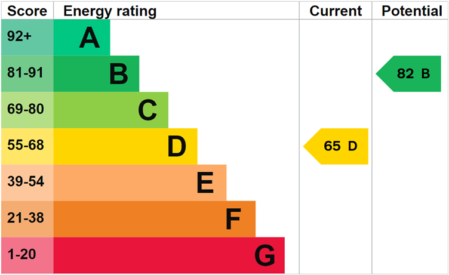
In this article, we’ll discuss EPC ratings. We’ll help you understand what they are, how to find the rating for your home, how to read it, and how to improve your home’s energy rating.
What Does ‘EPC Rating’ Mean?
EPC stands for ‘Energy Performance Certificate’.
It’s a measure of a property’s energy efficiency. Graded from A (most efficient) to G (least efficient.)
Your EPC rating isn’t just a label. It’s a reflection of how energy-efficient your property is. Your certificate will also;
- Point out areas to improve in the most cost-effective way, and
- Tell you the potential rating your property could have
The energy performance rating of your home or property impacts both your wallet and the environment. Understanding it is essential for making informed decisions about energy use and improvements. Click here to see how ratings will be changing to represent the benefits of infrared heating.
What is My EPC Rating?
To check your rating, all you need to do is go to the EPC Register:
https://find-energy-certificate.digital.communities.gov.uk/find-a-certificate/search-by-postcode
The register will show you a full breakdown on your property for free.
What’s Included in a Energy Performance Certificate Rating?
When you look at your Energy Performance Certificate, you’ll see the contents of what is included along the left-hand side.
Rules On Letting this Property
This section tells you if you can rent or let your property based on its rating.
Energy Rating and Score
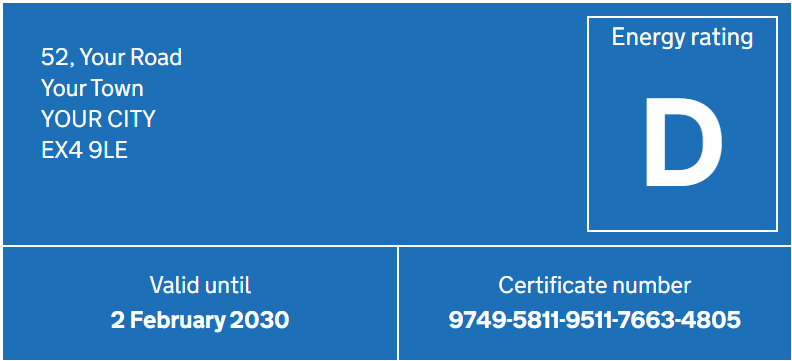
This shows;
- The energy rating of your property on a coloured scale, as well as
- The potential rating on the same scale.
In our example, the property has a rating of D with a potential rating of a B.
Breakdown of Property’s Energy Performance
The next section is the breakdown of the property’s energy performance. This is the part where they review how they reached the above conclusion.
The table shows the wall and roof insulation, window quality, heating and controls, water heating, lighting, floor insulation and secondary heating. They are all assessed and rated as either very good, good, average, poor or very poor.
How This Affects Your Energy Bills
This part shows you the estimated yearly energy costs for the property. As an example, ours states £809 per year. If we follow the advice, we can potentially save £146 per year.
Most certificates have the disclaimer;
‘The estimated cost shows how much the average household would spend in this property for heating, lighting and hot water’. It is not based on how energy is used by the people living at the property.
The estimated saving is based on making all of the recommendations in how to improve this property’s energy performance.’’
The part below this section shows how much energy you’ll need per year for heating and hot water.
Environmental Impact of this Property
This tells you;
- How many tonnes of CO2 your property produces per year
- What the average household produces, and
- The potential production for this property
This section also has a disclaimer that if you make the recommended changes, you could reduce emissions by x amount per year.
Changes You Could Make to Improve The Property’s Energy Performance
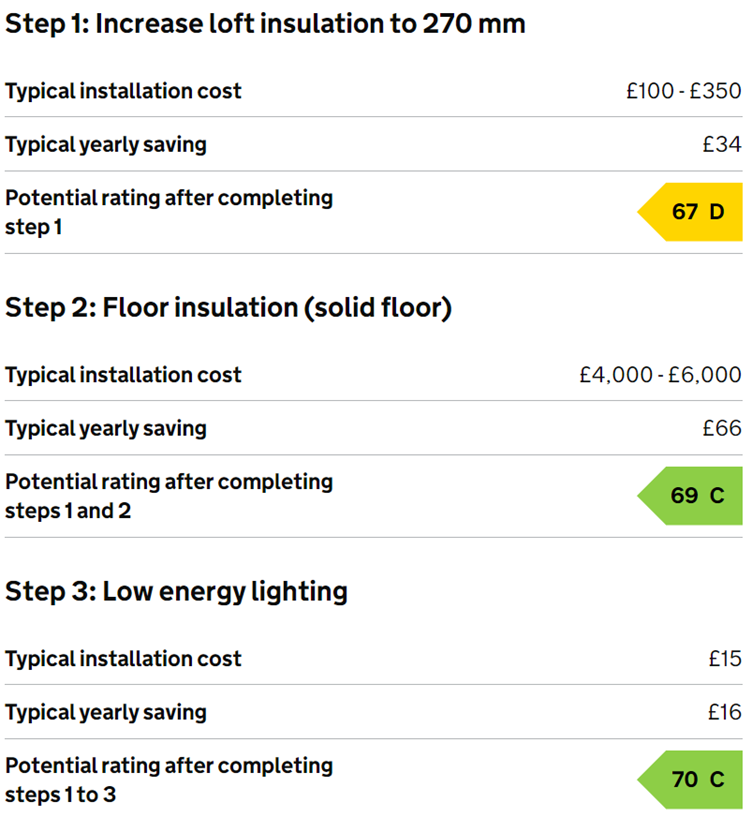
This shows the assessors comments on how you can improve your overall rating.
On the example that we used, our potential rating is a B, but how can we achieve this?
The assessor’s advice includes getting floor installation. It then shows the typical installation costs, in our case it’s £4,000 – £6,000 with a typical yearly saving of £39. Then it will show what your rating will be after making these changes.
Another recommendation is to get solar water heating which also forecasts typical installation costs of £4,000 – £6,000 and a typical yearly saving of £36.
Who to Contact About Your Energy Certificate
Lastly, the certificate shows who the assessor is and provides their contact details. If you have any issues, comments or queries about your Energy Performance Certificate, you can contact them.
What is a Good EPC Rating?
Ratings are assessed using the government’s Standard Assessment Procedure (SAP). They are banded from A (the most efficient) to G (the least efficient). The closer your rating is to A, the better it is; the closer to G, the worse it is.
The better the rating;
- The more you’ll save on energy bills, and
- The lower your environmental impact will be
New build homes have higher ratings than existing homes, which are likely to have a lower rating like D or E.
However, according to GOV.uk, the average EPC rating for a dwelling in England and Wales is Band D (rating 60).
How to Improve Your EPC Rating
Your certificate will tell you how to improve the energy efficiency of your property.
That said, there are multiple steps you can take to make your home more energy efficient. Some can be cheap and others can be expensive.
We’ll start with the cheapest first;
- Replace your light bulbs for energy efficient LED bulbs – this is the quickest, easiest and cheapest way to improve your rating.
- Increase loft insulation to 270mm – uninsulated houses lose on average 33% of their heat through the roof. Adding 270mm insulation can improve your homes’ energy efficiency and EPC rating.
- Install or renew wall insulation – another effective way of improving a property’s energy rating. Both on newer cavity walls and older solid walls.
- Install infrared heaters – The Standard Assessment Procedure used for calculating EPC rating favours infrared heaters for improving energy ratings.
- Upgrade or replace your boiler – An inefficient boiler can ruin your EPC rating. On the other hand, an efficient boiler can improve it significantly.
- Upgrade to double or triple-glazed windows – a house can lose up to 18% of its heat its windows. Single-glazed windows lose heat twice as fast as double-glazed. Triple-glazed windows are up to 40% more thermally efficient than double-glazed.
- Install floor insultation – 10% – 20% of a house’s heat is lost through the floor. New build homes have to have floor insulation, while many older homes don’t.
- Install renewable energy systems – like solar panels or ground-source heat pumps.

Written by George
The Right Heater For You
Find the best heater for you with our infrared heating calculators.
Find now