


Big EPC Changes Are Coming for Far Infrared Heating: Here’s What You Need to Know
Infrared heating is efficient, sleek, and delivers a level of comfort many traditional systems struggle to match.
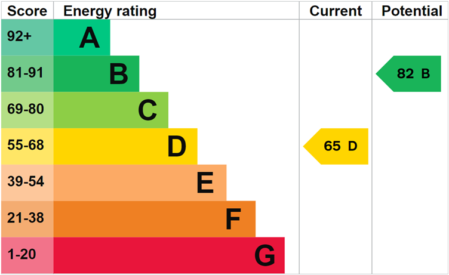
But if you’ve ever checked your property’s Energy Performance Certificate (EPC) after installing FIR, you may have been left scratching your head. Your EPC score barely budged.
Current EPC rules group FIR with basic “direct electric” heating, the same category as outdated storage heaters. This fails to reflect its real-world performance.
The result? Many homeowners and landlords see artificially low EPC scores, which can:
- Knock thousands off property value
- Limit rental opportunities
- Block access to certain funding and grants
The good news is that the Government has recognised the problem. FIR is about to get the EPC recognition it deserves, and the changes could be significant for property owners.
The EPC Classification Problem: How EPC Ratings Currently Treat Far Infrared Heating
Right now, assessors calculate EPCs using the UK’s Standard Assessment Procedure (SAP) for new builds and the Reduced Data SAP (RdSAP) for existing properties.
SAP provides a comprehensive assessment with detailed criteria, allowing technologies like Far Infrared (FIR) heating and their energy ratings to be factored more precisely. However, it’s typically more expensive to carry out.
RdSAP, used for most existing homes, relies on a simplified data set with fewer options to describe specific heating systems. As a result, FIR often gets grouped with basic electric panel heaters. The model assumes it performs at the same efficiency, overlooking FIR’s ability to:
- Heat rooms quickly
- Distribute warmth evenly, and
- Maintain comfort with less energy waste
This means even a modern, well-installed FIR system can still be treated like outdated electric heating under RdSAP assessments.
The Flaws in the Current Methodology
The problem lies in the lack of technology-specific performance data in the EPC model.
Lab simulations can’t capture what happens in real homes, where FIR’s targeted radiant heat warms people and objects directly, reducing air temperature fluctuations and wasted energy.
Recent large-scale trials at the University of Salford’s Energy House 2.0 show FIR can heat spaces;
- Faster, and
- More evenly
Than many other systems, with minimal temperature stratification.
In extreme cold, any underperformance wasn’t due to the technology but to under-sizing the system. An easily avoidable situation.
Until now, these real-world advantages weren’t being factored into EPC scores.
Appendix Q – The Game-Changer for FIR
What Appendix Q Is and How It Works
Appendix Q is a special pathway in SAP designed for innovative technologies that don’t fit into existing categories. It allows products to be modelled in EPCs using verified performance data, rather than the default assumptions that currently disadvantage FIR.
The Process for FIR Inclusion
To get FIR recognised currently, manufacturers must provide robust, independently verified test data. That’s where the research at Leeds Beckett University and Energy House 2.0 comes in. They’re building the evidence base needed for Appendix Q approval.
Industry insiders expect a dedicated FIR category to be added to Appendix Q in mid-to-late 2025. This will mean EPC assessors can use actual FIR performance data in their calculations, giving it the fair rating it deserves.
The Evidence: How FIR Performs in Real-World Trials
At the Energy House 2.0 facility, researchers compared FIR with a range of heating technologies. This included air source heat pumps and traditional emitters, under both typical UK winter temperatures (5°C) and extreme cold (-5°C).
Key findings included:
- Fast, even heat-up – FIR heated rooms quickly with minimal hot or cold spots.
- Consistent comfort – Operative temperatures (what people actually feel) were more stable and evenly distributed.
- Minimal stratification – Less variation between floor and ceiling temperatures compared to some alternatives.
- Cold-weather performance linked to sizing – Lower results in extreme cold were traced to systems that were under-sized, not to FIR’s core technology.
Comfort and Control Benefits
Because FIR warms people and surfaces directly, it feels comfortable, even at slightly lower air temperatures. This saves energy consumption without sacrificing comfort.
When combined with smart controls, it can deliver targeted heating only when and where it’s needed. This is called ‘Zonal Heating’, a feature that could earn extra EPC points under planned “heat flexibility” scoring in SAP 11 (2026).
EPC Changes Timeline and What They Mean for You
The upcoming EPC changes will transform how assessors rate Far Infrared heating. This will give homeowners and landlords new opportunities to boost ratings, meet regulations, and increase property appeal.
Key Milestones
- Mid-to-late 2025 – Appendix Q FIR category launches, allowing EPCs to reflect actual test data.
- 2026 (SAP 11 release) – FIR added to the main SAP/RdSAP database, treated more like low-carbon options such as heat pumps.
- 2026 onwards – “Heat flexibility” scores could reward smart FIR systems.
Impacts for Homeowners
- Likely EPC score increases without extra upgrades.
- Stronger case for choosing FIR in retrofit projects aiming for higher EPC ratings.
Impacts for Landlords
- Easier compliance with EPC minimums for rental properties.
- Enhanced marketability of FIR-heated homes to eco-conscious tenants.
Choosing FIR Before the Changes Land
Installing FIR now means you enjoy the comfort and efficiency immediately, with the added bonus of an EPC boost once the new rules come into force.
It also positions you ahead of the curve. You could avoid potential price rises and installer wait times once demand increases.
What to Look for in Infrared Heating Systems
- Correct sizing – Avoid underperformance in extreme cold by choosing the right sized heating panels.
- Appendix Q-ready products – Choose systems from reputable manufacturers preparing their data for approval.
- Smart controls – Invest in future-proof features that could add EPC points under “heat flexibility” scoring.
Our Perspective and Next Steps
Far Infrared heating has long been penalised by outdated EPC guidance, but that’s about to change. The combination of:
- Independent research
- Government recognition, and
- Appendix Q approval
Will finally give infrared heating the credit it deserves.
You can consider FIR as not just an upgrade, but an investment in your property’s energy performance.
The upcoming changes are a rare opportunity. Act now, and you could be enjoying a warmer, more efficient home well before your EPC catches up with reality.

Written by George
The Right Heater For You
Find the best heater for you with our infrared heating calculators.
Find now