


Do Infrared Heaters Get Hot? Here’s What You Really Need to Know
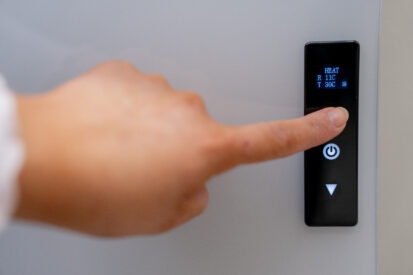
If you’re considering infrared heating, one of the first questions you’ll ask is simple:
Do infrared heaters get hot?
Yes, they do, but not in the way most people expect.
The important difference isn’t just whether they get hot. It’s what gets hot, how they deliver heat, and how that affects comfort, safety, and efficiency.
Let’s break it down properly.
Do Infrared Heaters Get Hot to the Touch?
It depends on the type of infrared heater you’re using, because not all infrared systems operate at the same surface temperature.
Some are designed for gentle, steady indoor heating and run at controlled, moderate heat levels. Others, particularly high-output or outdoor models, are built to reach much higher temperatures in order to deliver instant warmth over larger or exposed areas.
Understanding which type you’re looking at makes all the difference when answering how hot they actually get.
Infrared Panel Heaters (Most Common for Homes)
These slim, flat panels are typically installed on walls or ceilings in homes and offices. We also sell portable infrared heaters that come with feet or on wheels.
- Surface temperature: Typically, 70°C–110°C
- Hot to the touch: Yes
- Glowing red: No
If you place your hand directly on a working infrared panel, it will feel hot, similar to a traditional radiator.
However,
- They are not designed to be handled while operating.
- They are usually mounted out of casual reach.
- They don’t have exposed glowing elements.
When installed correctly, they operate safely and efficiently.
Quartz or Halogen Infrared Heaters (Often Outdoor)
These are typically used in patios, garages, workshops, and commercial spaces.
- Surface temperature: 300°C to 800°C at the heating element
- Visibly glowing: Yes (red/orange)
- Designed for: Outdoor or high-output environments.
These models run significantly hotter than indoor panel heaters. You should not touch them while in operation. They are built for performance rather than discreet home heating.
So yes, some infrared heaters get very hot.
What Actually Gets Hot?
Here’s where infrared heating works differently from traditional systems.
Most conventional heaters (like gas radiators or electric convectors) heat the air. The warm air rises, circulates, and eventually warms the room.
Infrared heating works through radiant heat transfer.
Instead of heating air, infrared heaters:
- Emit infrared radiation.
- Warm objects, walls, floors, and people directly.
- Allow those surfaces to gently release heat back into the room.
This principle applies to both indoor panels and outdoor quartz heaters. The difference is the intensity of the radiant output.
It’s similar to standing in sunlight on a cool day. The air might not be hot, but you feel warm.
This is why many people describe infrared heat as more comfortable, more even and less stuffy.
The panel itself gets hot in order to emit radiant energy, but the warmth you feel isn’t from hot air blowing around.
Why Do Infrared Heaters Need to Get Hot?
To produce infrared radiation, the heating element must reach a specific temperature.
The hotter the surface, the stronger the radiant output, the more effective the heat transfer, and the quicker objects in the room absorb warmth.
Indoor panels are engineered to balance:
- Surface temperature
- Efficiency
- Safety
- Consistent performance
Outdoor quartz and halogen heaters, on the other hand, intentionally run at much higher element temperatures (often 300°C–800°C) because open-air environments lose heat quickly. The higher surface temperature allows them to deliver instant, directional warmth in exposed spaces.
Are Infrared Heaters Safe If They Get Hot?
This is the natural follow-up question, especially if you have kids or pets.
When properly installed and used as intended, infrared panel heaters are incredibly safe. This is mostly since they’re usually wall or ceiling mounted, so accidental contact is limited.
Most modern infrared panels:
- Include built-in thermal cut-offs.
- Have no exposed flames.
- Don’t burn oxygen.
- Don’t produce carbon monoxide.
- Don’t circulate dust.
They’re widely used in homes, offices, schools, healthcare environments and outdoor spaces.
Outdoor quartz and halogen heaters operate at much higher element temperatures and are designed to be mounted well above head height.
They are safe when:
- Installed according to manufacturer guidelines
- Positioned out of reach
- Used in well-ventilated outdoor or semi-outdoor areas.
Because they glow and run hotter, they are not designed for low-level indoor use. But in the right setting, they are a safe and effective way to provide patio or commercial warmth.
Do Infrared Heaters Make a Space Feel Hot?
Yes, but in a different way.
Instead of blasting hot air into the space, infrared heat:
- Warms the people and surfaces it touches.
- Reduces cold spots.
- Creates a stable, even warmth.
Many homeowners find they feel comfortable at slightly lower thermostat settings compared to convection systems.
That’s because radiant warmth heats you directly, not just the surrounding air.
Indoors, this creates steady, even warmth.
Outdoors, higher-intensity infrared heaters provide immediate directional heat. Ideal for patios, garages, and open environments where traditional heating would quickly dissipate.
In Conclusion
Yes, all infrared heaters get hot.
- Indoor infrared panels typically reach surface temperatures of 70°C–110°C and are designed for safe, steady residential heating.
- Outdoor quartz and halogen heaters can reach element temperatures of 300°C–800°C to deliver powerful, directional heat in exposed spaces.
They need to get hot to produce radiant energy.
The key difference isn’t whether they get hot, it’s how that heat is used.
Indoor panels create comfortable, even warmth by heating surfaces and people directly.
Outdoor units use higher temperatures to overcome open-air heat loss and provide instant warmth where traditional heating would struggle.
Choosing the right type depends on where and how you want to use it.

Written by Shannon
The Right Heater For You
Find the best heater for you with our infrared heating calculators.
Find now