


Church Heating: What to Consider Before Choosing a New System
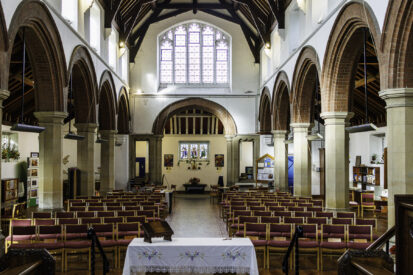
Read This Before You Choose Heating for Your Church
Heating a church is not like heating a house, office or village hall.
Most churches were never designed with modern heating in mind. High ceilings, cold stone walls, draughty doors, listed-building restrictions, uneven use and rising energy costs all make the decision more complicated.
And this is where many churches run into problems.
They choose a heating system based on what feels familiar, rather than what actually suits the building.
A church heating system needs to do more than “make the room warm”. It needs to provide comfort where people are sitting, respect the fabric of the building, avoid unnecessary disruption and be realistic to run.
In this guide, we’ll look at the main heating options for churches, including convection heating, underfloor heating and infrared heating, and explain what you should consider before making a decision.
Why Churches Are So Difficult to Heat
Churches often have a unique combination of challenges:
- High ceilings
- Large open spaces
- Poor insulation
- Cold stone floors and walls
- Infrequent or irregular use
- Draughts from doors and windows
- Heritage or listed-building restrictions
- Areas that are used differently at different times
This means that simply installing a standard heating system and hoping for the best is rarely the most efficient approach.
A system that works well in a home may struggle in a church because the heat rises, escapes or warms areas that are not actually being used.
The key question is not always:
“How do we heat the whole church?”
A better question is often:
“How do we make the people inside the church feel comfortably warm, without wasting energy heating unused space?”
The Main Types of Church Heating
There are several ways to heat a church, but most systems fall into two broad categories: convection heating and radiant heating.
Convection Heating
Convection heating works by warming the air.
Examples include:
- Wet radiator systems
- Fan-assisted heaters
- Warm air heating systems
- Some air source or ground source heat pump systems
These systems heat the air around them, which then circulates through the building. In normal domestic spaces, this can work well. But in churches, convection heating can be more challenging.
Because warm air rises, much of the heat can travel upwards towards the roof before the people sitting below feel the benefit. In buildings with high ceilings and poor insulation, this can lead to slow heat-up times and higher running costs.
Radiant Heating
Radiant heating works differently.
Instead of relying mainly on warming the air, radiant heating warms people, surfaces and objects directly.
Examples include:
- Underfloor heating
- Far infrared heating panels
- Mid infrared heaters (ones that glow)
- Under pew heaters
A simple way to understand radiant heat is to think about the warmth of the sun on your face on a cold day. The air around you may still feel cool, but the radiant heat feels warm directly on your skin.
This is why radiant heating can be particularly useful in churches, where heating the entire air volume of the building may be slow, costly or impractical.
Option 1: Traditional Convection Heating
Traditional convection systems are familiar and widely used. For some areas of a church building, they can still be a sensible choice.
Where convection heating can work well
Convection heating may be suitable for:
- Small meeting rooms
- Offices
- Vestries
- Kitchens
- Admin areas
- Well-insulated spaces with standard ceiling heights
In these spaces, the air volume is smaller and easier to heat, so radiators or similar systems can perform effectively.
Where convection heating can struggle
In the main church space, however, convection heating can be less efficient.
Common issues include:
- Heat rising above the occupied area
- Long heat-up times
- Heat loss through draughts and open doors
- Cold stone walls and floors remaining uncomfortable
- Higher energy use if the whole building needs warming
- More complex pipework and installation requirements
This does not mean convection heating is always wrong. But it does mean churches should be careful before assuming it is the best solution for the main worship area.
Option 2: Underfloor Heating
Underfloor heating is another option sometimes considered for churches.
It has one obvious advantage: it is hidden. Once installed, there are no visible heaters on walls, ceilings or pews, which can be attractive in heritage buildings.
It also provides a gentle form of radiant warmth from the floor upwards.
The benefits of underfloor heating for churches
Underfloor heating can offer:
- A discreet appearance
- Even warmth across the floor area
- No wall mounted or ceiling mounted units
- A comfortable heat when used correctly
The drawbacks of underfloor heating
For many existing churches, the difficulty is installation.
Underfloor heating may involve:
- Lifting or replacing flooring
- Significant disruption
- High installation costs
- Potential issues with listed-building consent
- Slow response times
- Less flexibility for zoning
- Maintenance challenges if anything goes wrong beneath the floor
It can also take a long time to heat up, which may not suit churches that are used for short services, occasional events or irregular bookings.
For a church that is only occupied for a few hours at a time, a slow response heating system may not be the most practical or cost-effective option.
Option 3: Infrared Heating for Churches
Infrared heating is becoming a popular option for churches, chapels and heritage buildings because it does not rely on heating the air first.
Instead, infrared heaters emit radiant heat that warms people and surfaces directly.
This can make infrared heating particularly useful in large, draughty or poorly insulated spaces.
Why infrared heating suits many churches
Infrared heating can be useful because it focuses warmth where it is needed.
Rather than trying to heat the entire volume of air in the church, infrared can be positioned to warm specific areas such as:
- Pews
- Seating areas
- Choir stalls
- Chapels
- Meeting areas
- Welcome spaces
- Altars or focal areas
- Community-use zones
This makes it easier to divide the church into heating zones, so you are not paying to heat the whole building when only one area is in use.
Different Types of Infrared Church Heaters
Not all infrared heaters are the same. The right type will depend on the building, ceiling height, layout, use pattern and aesthetic requirements.
Under-pew heaters
Under-pew heaters are designed to provide localised warmth to people sitting in fixed seating.
They can be a good option where the goal is comfort during services rather than heating the whole building.
Far infrared panels and bar heaters
Far infrared heaters provide a gentler radiant heat and are often used for longer-term comfort. With regular use, they can help warm surrounding surfaces such as walls, floors and furniture, which may improve the overall feel of the space.
They are often suitable where a more discreet, steady form of warmth is needed.
Links to powerful infrared heating bars.
Links to far infrared flat panel heaters.
Mid infrared heaters
Mid infrared heaters provide a more immediate and intense heat. They may be suitable for larger, colder or more challenging spaces where faster warmth is needed.
However, they need to be specified carefully, as the heat can feel stronger and may not be right for every area of a church.
Links to mid infrared heaters.
The Main Benefits of Infrared Heating in Churches
- It heats people directly
In a church, comfort matters more than simply raising the air temperature.
Infrared heating helps warm the people and surfaces in the occupied zone, rather than sending most of the warmth up into the roof space.
- It can reduce wasted heat
If only part of the building is being used, infrared heating can be zoned so that only that area is heated.
This is useful for churches that host different activities throughout the week, such as:
- Sunday services
- Choir practice
- Coffee mornings
- Community groups
- Small meetings
- School visits
- Evening events
- It can be less disruptive to install
Many infrared systems do not require pipework, boilers or major building alterations.
Depending on the product and electrical requirements, heaters may be wall-mounted, ceiling-mounted, suspended, fitted near pews or hardwired by a qualified electrician.
This can make infrared heating more suitable for churches where disruption needs to be kept to a minimum.
- It works well with controls
Good controls are essential.
Timers, thermostats, sensors and zoning controls can help make sure heaters are only used when and where they are needed.
For churches, this is especially important because usage patterns can vary so much from week to week.
- It can be sympathetic to heritage buildings
Infrared heaters are available in different styles, including discreet panels and bar heaters. This gives churches more flexibility when balancing comfort with the appearance of the building.
For listed churches or heritage spaces, the visual impact of any heating system should always be considered early in the planning stage.
Common Mistakes to Avoid When Choosing Church Heating
Mistake 1: Trying to heat the whole building all the time
In many churches, this is unnecessary and expensive.
It may be more practical to heat the occupied areas well, rather than trying to bring the entire building up to a uniform temperature.
Mistake 2: Choosing a familiar system without considering the building
Radiators and convection systems are familiar, but that does not automatically make them the best choice for a high-ceilinged church.
The building’s size, insulation, usage and layout should guide the decision.
Mistake 3: Ignoring heat-up times
Some systems take a long time to reach a comfortable temperature.
If your church is only used for short periods, a slow-response system could mean you are paying for heat long before anyone arrives.
Mistake 4: Forgetting about zoning
A church may have several different heating needs.
The main worship area, side chapel, vestry, community room and entrance space may not all need heating at the same time.
Zoning gives you more control and can help reduce unnecessary energy use.
Mistake 5: Looking only at the purchase price
The upfront cost is important, but it is not the whole picture.
You should also consider:
- Installation cost
- Running cost
- Maintenance
- Disruption
- Lifespan
- Controls
- Suitability for the building
- Comfort for users
A cheaper system that is expensive to run or poorly suited to the space may cost more in the long term.
What Should a Church Consider Before Choosing a Heating System?
Before investing in a new heating system, it is worth asking:
- How often is the church used?
- How long is each service or event?
- Which areas actually need heating?
- Are the pews fixed or movable?
- What is the ceiling height?
- Are there listed-building restrictions?
- Is the existing electrical supply suitable?
- Are there cold spots or draughts?
- Does the building need background warmth or comfort heating?
- Will different groups use different areas?
- What level of control does the church need?
The answers to these questions will help determine whether convection heating, underfloor heating, infrared heating or a combination of systems is most appropriate.
So, What Is the Best Heating System for a Church?
There is no single answer.
A small, well-used church hall may need something different from a large listed church with stone walls and occasional services.
Convection heating can work well in smaller rooms and supporting spaces.
Underfloor heating can be effective in the right building, especially where major floor work is already planned.
Infrared heating is often a strong option for churches because it provides direct warmth, supports zoning, reduces reliance on heating the full air volume and can be installed with less disruption than many traditional systems.
For many churches, the best solution may be a carefully designed combination of technologies.
Final Thought
Church heating should never be chosen on guesswork.
The right system needs to suit the building, the people using it and the way the space is actually occupied.
For churches dealing with high ceilings, cold walls, heritage restrictions and rising energy costs, infrared heating is well worth considering. It offers a practical way to provide targeted warmth without necessarily trying to heat every cubic metre of air inside the building.
If your church is reviewing its heating, start with the building itself. Look at how it is used, where people sit, how long they stay and which areas need comfort most.
That is usually the difference between a heating system that simply turns on, and one that genuinely works.
Get In Touch
Need help choosing the right heating for a church, chapel or heritage building?
Speak to Warm4Less for practical advice on infrared heating, church heating options and zoned electric heating solutions.

Written by Ben
The Right Heater For You
Find the best heater for you with our infrared heating calculators.
Find now