


See Our Range of Infrared Heaters
Shop NowCheapest Way to Heat Your Home: A Comprehensive Guide
As energy prices continue to rise, finding the most efficient and affordable way to heat your home is more important than ever.
In this post, we’ll break down the costs and benefits of some of the most common home heating methods based on heating a typical 3 bedroom house in the UK. We’ll also reveal why infrared heating is the cheapest way to heat your home for many people.
1. Far Infrared Heating: The Cheapest Way To Heat Your Home
Unlike traditional heaters that warm the air, infrared heaters work by directly heating objects and people in a room. This makes it a far more efficient and targeted form of heating.
Costs:
- Installation: Very low (£100–£300 per panel)
- Energy Input needed (kWh/Year): 4,000 kWh
- Running Costs Per kWh: £0.30
- Annual running costs: £1,200
Advantages:
- Instant, targeted warmth (no waiting for radiators or air to warm up)
- No wasted heat – objects retain warmth and radiate it back into the room
- Perfect for zonal heating (heat only the rooms you’re using)
- Maintenance-free (no servicing required)
- Compact, discreet panels that can free up valuable space
- Compatible with renewable energy like solar PV
Efficiency Notes:
Directly heats people & objects; heats only occupied rooms; virtually no heat wasted; zonal heating dramatically reduces energy use
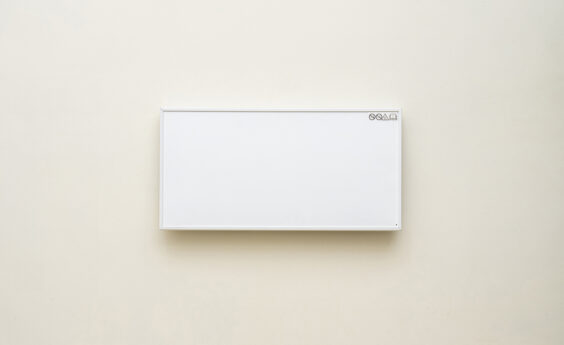
170 Watt Eco Slimline Infrared Panel Heater
£62.97
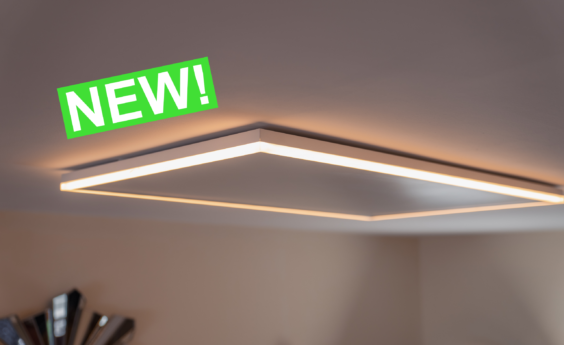
800 Watt Lumina LED Ceiling Panel
£300.25
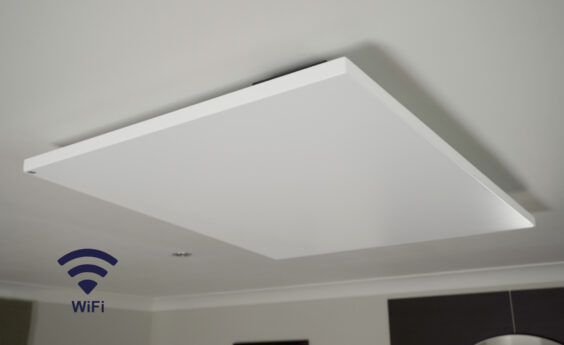
320 Watt Platinum Ceiling-Mounted Infrared Smart Heater
£217.95

350 Watt Eco With In-Built Controller
£153.12
800 Watt Platinum Ceiling-Mounted Infrared Smart Heater
£292.16
2. Gas Central Heating
Gas boilers have been the traditional choice in the UK, but they are far from the most efficient or sustainable.
Costs:
- Installation: £1,500–£4,000
- Energy Input needed (kWh/Year): 16,667 kWh
- Running Costs Per kWh: £0.11
- Annual running costs: £1,833
Drawbacks:
- Expensive installation and ongoing maintenance
- Relies on fossil fuels, producing carbon emissions
- Heat is slow to build and often wasted in unused rooms
Efficiency Notes:
Heat lost in boiler & pipes; heats air rather than objects; warm air escapes easily
3. Conventional Electric Heating
Standard electric heaters (like storage heaters and plug-in radiators) heat the air in a room, which is far less efficient than infrared.
Costs:
- Installation: Low (plug-in) to £2,000+
- Energy Input needed (kWh/Year): 15,000 kWh
- Running Costs Per kWh: £0.30
- Annual running costs: £4,500
Drawbacks:
- High running costs
- Heat is uneven and easily lost when doors/windows are opened
Efficiency Notes:
Heats air only; quick heat loss; requires long run times
4. Wood-Burning Stoves
Wood stoves create a cosy atmosphere but come with significant downsides.
Costs:
- Installation: £1,000–£3,500
- Energy Input needed (kWh/Year): 20,000 kWh
- Running Costs Per kWh: £0.055
- Annual running costs: £1,100
Drawbacks:
- Messy, high maintenance, and requires fuel storage
- Creates emissions and needs a chimney or flue
- Not practical for whole-home heating
Efficiency Notes:
Loses heat via chimney; heats only specific rooms; requires fuel and maintenance
5. Air Source Heat Pumps
Heat pumps are efficient but expensive to install and not always effective in cold weather.
Costs:
- Installation: £7,000–£14,000
- Energy Input needed (kWh/Year): 5,000 kWh
- Running Costs Per kWh: £0.30
- Annual running costs: £1,500
Drawbacks:
- Very high upfront costs
- Performance drops in cold climates
- Requires outdoor space and regular servicing
Efficiency Notes:
Efficient in mild climates; 3 kWh heat per 1 kWh electricity; less efficient in very cold weather
6. Ground Source Heat Pumps
Even more efficient than air source, but also significantly more costly and space-demanding.
Costs:
- Installation: £10,000–£18,000
- Energy Input needed (kWh/Year): 4,286 kWh
- Running Costs Per kWh: £0.30
- Annual running costs: £1,286
Drawbacks:
- Prohibitively expensive for most households
- Requires large outdoor areas for pipework
- Disruptive and complex installation
Efficiency Notes:
Very efficient; stable performance; high installation cost; requires garden space
Why Far Infrared Heaters Are the Most Cost-Effective Choice
Unlike conventional systems that waste energy heating air, far infrared heaters provide direct, lasting warmth that you feel immediately. Walls, furniture, and floors absorb the heat and release it gradually, keeping your home warm for longer with less energy.
With zonal heating, you only heat the rooms you’re using, cutting bills even further. Combine this with renewable electricity or solar PV, and running costs can be close to zero.